.svg)


I was sitting in a cafe in Tallinn recently, chatting with my mom. We were laughing, telling stories, doing what humans do. Suddenly, a woman from a few tables over marched up to us.
She wasn't a worker. Yet she felt she could look me dead in the eye and say: “Excuse me, you need to shut the f*** up because some of us are trying to have a quiet lunch.” She dropped this grenade of shame and immediately ran back to her friends.
I froze. Had we been shouting? But no - we were just happy, not shrinking ourselves. I was shocked. Did I really just get told off in a busy cafe in the middle of a shopping centre for talking about trains?
After the embarrassment passed, I started thinking about it - why did this woman care so much about how loud a stranger was talking? I realized that she wasn't actually angry at my volume. She was angry that I broke the rules she had submitted to.
In her world - and in many repressive environments - to be "normal" is to be invisible. To be gray. To take up zero space. So letting me go unpunished for being "loud" posed a threat to her own sense of self. If I wasn’t put in a box, what did that mean about the boxes she willingly trapped herself in?
But the problem is: while she was busy judging me, the first thing I did was start judging myself.
Many of us are walking around living inside a prison of our own making, convinced that the world is grading our performance. It’s like the guard in the panopticon - an ever-present threat of someone watching, invisible to us. We call this social anxiety or "reading the room".
But psychology calls it the spotlight effect - the belief that we are being noticed more than we actually are.
Our brains are wired to be the center of our own universe. Because you experience life entirely from inside your own head, you naturally assume you are the protagonist in everyone else’s movie too.
You walk into a party alone and think, “Oh god, everyone is looking at me. They’re thinking I’m a loser.”
But here’s the brutal, liberating truth: in their movie, you are not the main character. You are an extra.
If they notice you at all, it’s for a split second before they go back to worrying about whether they look weird holding their drink. (The lady at the cafe forgot about me five minutes later.)
We curate our lives, our Instagrams, and our conversations around the assumption that people are keeping score. We think if we tell a joke and nobody laughs, it’s a tragedy. It means people hate us.
It’s both worse and better than that. They don't hate you - they just don't care.

So if other people aren’t watching, who is?
In her book The Robber Bride, Margaret Atwood describes a woman who is constantly watching herself being watched:
"You are a woman with a man inside watching a woman. You are your own voyeur."
Atwood was writing about the male gaze, but the point she was making is wider than that. It applies to the human gaze: there is an imaginary supervisor in all of our minds, watching everything we do.
This is the root of modern anxiety. You aren't just living your life. You are simultaneously standing outside your body, watching yourself live it, and critiquing the performance:
“Did I sound smart just then?” “Do I look successful to my neighbors?” “Is this story entertaining enough to tell?”
This is preventative people pleasing. You are editing your personality in real time to avoid a judgment that hasn't even happened yet. You’re killing your own authenticity to appease a ghost.
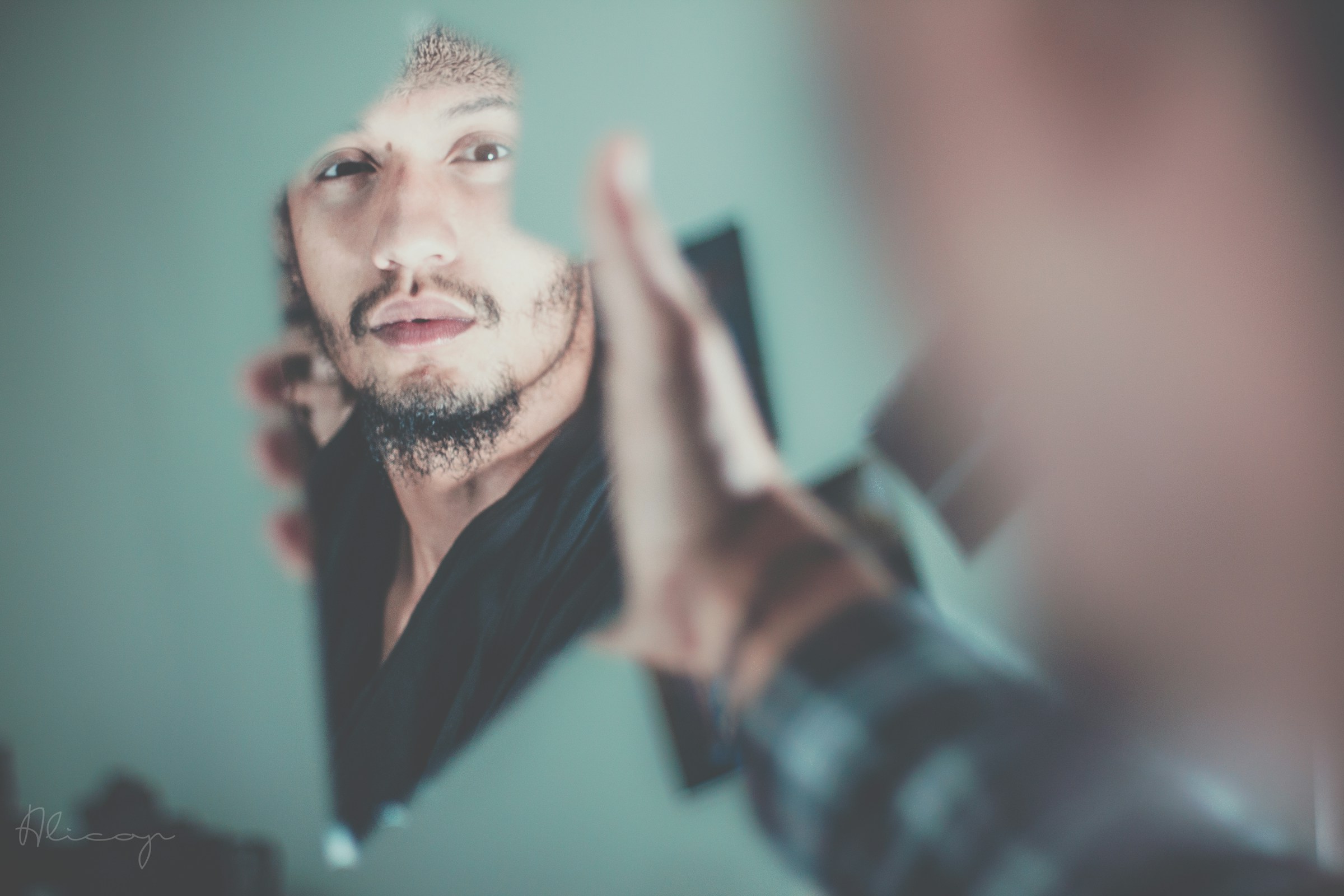
We tell people who are socially anxious that they need to work on their social skills.
But that’s nonsense. Most of the time, social anxiety isn't not knowing what to say - it’s not feeling able to.
It is a disease of inhibition. You have the thought. You have the joke. You have the story. But your internal voyeur slams the door shut and says, “That’s not good enough. That’s weird. That’s boring.”
The filter is too tight, so you stay silent.
The only difference between the "life of the party" and the wallflower is often just the height of that barrier. This is why people drink alcohol - not to get smarter, but to lower the gate so the real person can finally walk out.

If you want to break out of the prison, you have to realize that there is no guard in the watchtower. You have to kill the Main Character. Nobody is watching you because they are too busy watching themselves.
People categorize others quickly because their brains are lazy, not because they’re malicious. They put you in a box so they can move on to thinking about themselves. But you are multidimensional, and their box doesn't actually trap you if you don’t let it.
Everyone is terrified of their internal voyeur, but you don’t have to be.
Stop editing your life for an audience that isn’t watching. The only person tuned in is you - so just make sure you like the plot.

Rooting for the Real You,
Hanna from Pulse