.svg)


I remember a specific panic that used to sweep through Cambridge University. It wasn't about exams. It wasn't about the workload.
It was about a beer bottle in the background of a photo.
I knew brilliant medical students – future surgeons, the people who would one day hold hearts in their hands – who were absolutely terrified of the General Medical Council. They were convinced that if a photo surfaced of them even existing in the presence of alcohol, or looking slightly disheveled, or just having fun, they would be disbarred.
They believed their career depended on them being a robot.
So, they curated a lie. They scrubbed their socials. They presented a "work self" that was sterilized, serious, and utterly devoid of pulse. They segmented their lives into "safe" and "secret."
And I think that is a tragedy. Not just for them, but for the rest of us.
Somewhere along the line – maybe when LinkedIn became our new village square – we decided that "competence" requires the erasure of personality. We started believing that you can’t be a serious scientist if you have long pink acrylic nails. We decided you can’t be a respected founder if you have a life outside of "the hustle."
We created a culture where we slice ourselves into palatable little pieces: the corporate avatar, who talks about "scale" and "vision", versus the real human being who has interests outside of work, drinks, cries, makes mistakes, and actually has a soul.
We keep them separate because we think it’s safer. We think the mask protects us.
But here's the truth we don’t talk about: the mask is untrustworthy.

If I walk into a surgery and my doctor looks like a stock photo model – perfect hair, zero fatigue, rehearsed-sounding words – my instinct isn't, "wow, how competent".
The first thing I think is, "what are you hiding?"
If you're willing to lie about who you are on the weekend, what else are you willing to lie about? How far would you go to protect your "perfect" image? Would you go to a surgery hungover, pretending like nothing's wrong?
If you're performing the "good doctor" for me, are you actually present with me, or are you just managing a PR crisis that hasn't happened yet?
Authenticity is the currency of trust. And you cannot be authentic if you're fragmented.
I had a physics teacher in school. She didn’t look like the stereotypical physics teacher. She had bleach-blonde hair and long, bright pink nails. She looked like she walked off the set of a Barbie movie.
According to the professional rulebook, she shouldn't be taken seriously – in fact, many of the people at that school didn't. She was too loud, too colorful, too much.
But she was the first person to make me understand E=mc². She was very good at her job. And more importantly, she was real. She didn't turn off her personality to teach thermodynamics or electromagnetism. She brought her whole self into the classroom, pink nails and all.
Because she wasn't hiding, we trusted her. And because we trusted her, we learned.

My colleague recently told me about this guy she met at a lecture. He works in tech. You know the type – or at least, you think you know the type.
He told her he was going to be teaching a session on "arms control." My brain immediately went to Oppenheimer. I pictured men in grey suits discussing nuclear treaties, geopolitical security, and government secrets. I thought, since when is she hanging out with national security contractors?
Then she corrected me.
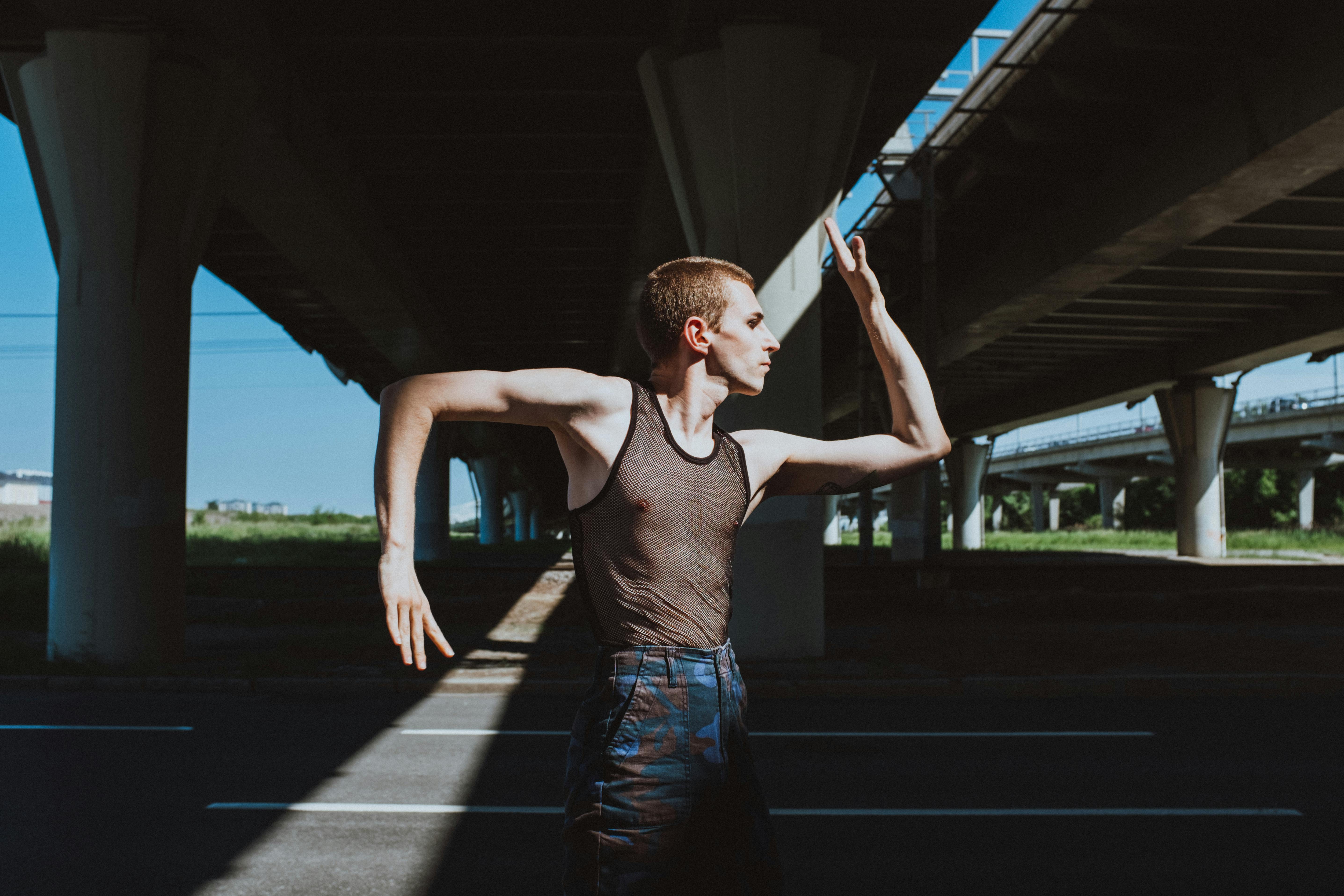
The "arms control" he teaches? It’s a specific technique in voguing, a dance originating from the Harlem ballroom scene. I had to laugh. I was picturing missile silos; but he was teaching people how to create lines and angles with their hands.
Once the laughter settled, I realized how perfect that duality is. As a dancer myself, I know the discipline that goes into that art form. But looking at him – a Serious Tech Founder dealing with investors, equity, and scale – you would never guess that this is his other half.
In a traditional "professional" world, he would be told to hide the dancing. “Founders need to be obsessed with the product,” they’d say, “don’t distract from your valuation with dance videos.”
But the fact that he does both makes him infinitely more fascinating.
He isn't two people. He is one whole, complex human. And if he hid the dancer to protect the "founder" persona, the world would lose out on the unique genius that happens where those two worlds collide.
When we segment ourselves, we lose energy. It is exhausting to keep the work mask glued to your face for 8 hours a day. It drains the creativity and empathy that actually makes you good at your job.
We are terrified that if we show our mess, we’ll lose respect. But look around. The leaders, creators, and friends we actually admire? They aren't the robots, but the ones who are undeniably, messily, loudly themselves.
We don't need more "professionals." We need doctors who go to raves. We need physicists with acrylics. We need founders who vogue.
So, do yourself a favor and stop slicing yourself into pieces. Bring the "weird" parts of you to the table. It might scare the robots, but it’s the only way to find your real people.
Rooting for the real you,
Hanna from Pulse

---
The refusal to slice yourself into pieces is the ethos of Pulse Wrld. We host weekly social activities in Tallinn, Estonia, created for humans, not avatars. If you’re ready to drop the mask and meet people in Tallinn who value the messy, real stuff over the "perfect" image, come hang out. Bring your whole self.