.svg)

We have a habit of compressing our lives into zip files.
We do it with our daily schedules. We assume that if we wake up too late, the entire day is ruined. Instead of just shifting our plans and getting started in the afternoon, we throw our hands up, sit on the couch, and wait for tomorrow. We compress a “good day” into such a rigid, fragile package that the moment we deviate from it, the whole thing breaks.
And we do the exact same thing with our biggest life goals.
Think about a goal like moving to a new country, quitting a stable job, or starting an unconventional project. Most of us look at something like ”moving to New York” and view it as one massive zip file. It looks so heavy, dense, and complicated that we don't even let ourselves double-click it. We assume the reality of executing the change will be overwhelming, so we talk ourselves out of it before we ever begin the research. We decide it is too hard without actually knowing what the task entails.
But a zip file isn't an actual object. It’s just the packaging.
When you extract it, you find a folder. You open that folder, and there are three sub-folders. You open one of those, and you find only two short text documents.
Moving to a new city isn’t a single task you just go and “do”. It's an initiative. To make it happen, you don't have to leap across the ocean tomorrow. You have to start with just one file. Let yourself daydream. Take a micro-action. Where would I want to live? Let me look at a map. What is the visa process? Let me Google it for ten minutes. How would I cope in a new place? Let me book an Airbnb in a different city for a weekend and try to navigate an unfamiliar grocery store.
This process is not complicated, and yet we rarely let ourselves do it. We want the final result, but refuse to engage with the pieces of the process.
We avoid the messy steps because we view our future selves as still photographs.
We say, “I want to be a healthy person,” and we visualize a static, cinematic frame of ourselves looking fit, serene, and entirely put together. We mentally strip away the unglamorous reality that happens between the frames: the actual grocery shopping, the chopping of vegetables, the tired gym sessions. We ignore the fact that we are always in process, we are never still. The “end state” is not a photo, it’s a movie that keeps rolling.
Worse, we think we have to upgrade every aspect of our lives at the exact same time. That to be successful, we have to be on top of our career, our admin, our friendships, and our hobbies simultaneously.
But no one actually operates like that. You cannot upgrade an entire operating system all at once while keeping the computer running. If you’re focused on learning a new skill, your house might be messy. If you’re working on improving your social life, your career might just sit at the baseline. That is how human capacity works. You pick one or two areas to actively improve, and you ensure the others don't fall apart in the process.
But when we expect perfection across the board, we freeze. We become terrified of stepping off the socially agreed-upon path, and default to the routes that are already mapped out for us.

For the first twenty years of our lives, the education system puts us on a highly prescribed path. A teacher controls the schedule, hands us a syllabus, and tells us exactly what a passing grade looks like.
When we leave school, we subconsciously wait for someone else to hand us the next syllabus. We follow the main road because we assume it’s mandatory.
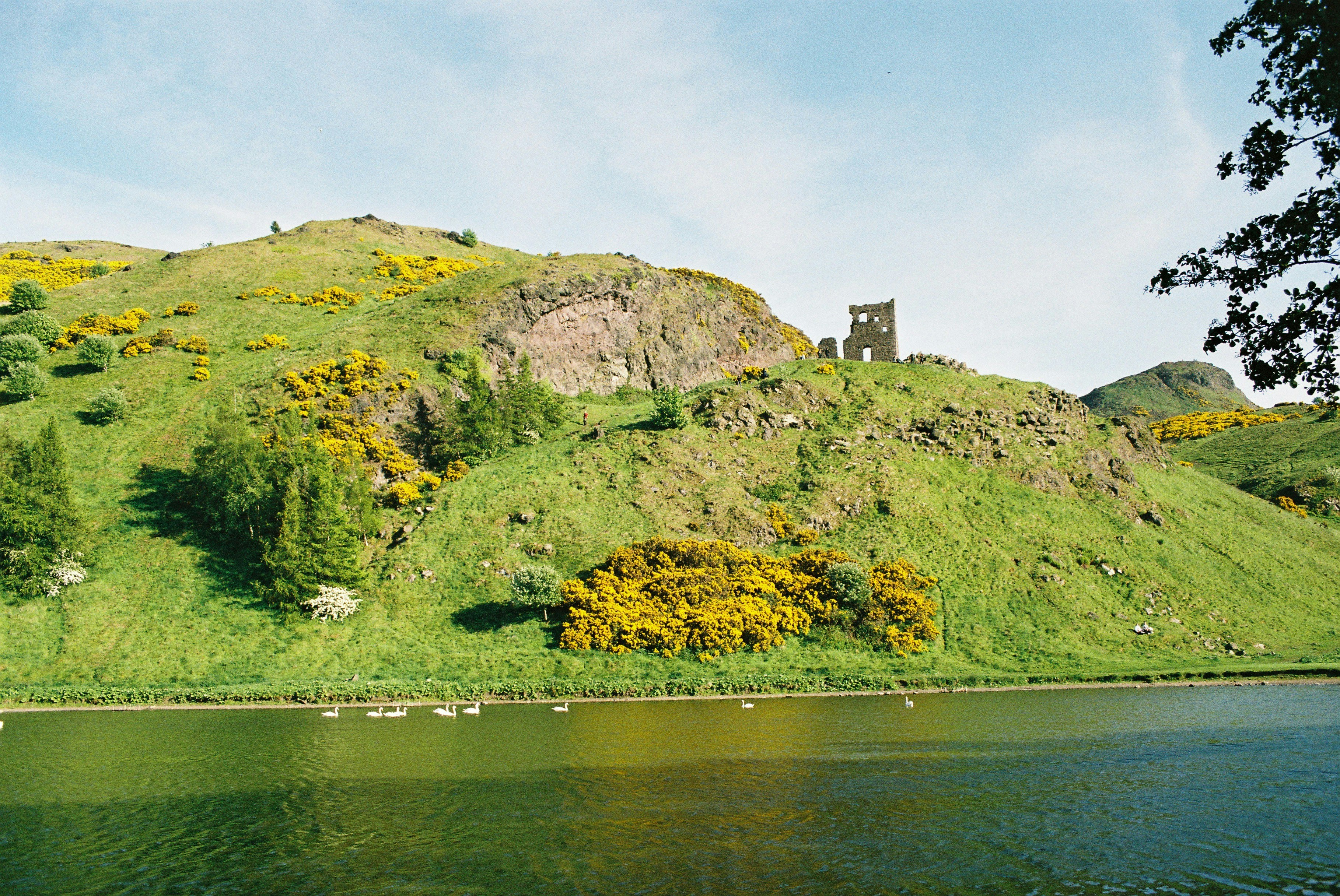
A while ago, a friend of mine was hiking Arthur’s Seat in Edinburgh with her family. They were going up the main path that leads straight to the peak. It’s crowded, obvious, and leads directly to the goal - the top of the hill.
Halfway up, she was starting to feel tired. She looked at the peak and realized she didn't actually care about reaching the summit - she just wanted a different perspective. She knew she was physically capable of doing it, but the desire just wasn't there.
So she didn’t force herself to keep going just to take the exact same photo as every other tourist. Instead, she took an empty side path that she had noticed earlier curling around the side of the hill. It had clearly been walked before, yet there wasn’t a single person using it. It led to some old ruins and a beautiful hidden view of the city and the sea that no one else was seeing. She didn't reach the goal she was supposed to reach, and yet she was significantly happier because of it.
We have free will, but we rarely act like it. How often do we force ourselves up a mountain just because everyone else is walking in that direction? You don't have to pursue a specific career milestone or lifestyle just because it’s the main road. You’re allowed to take a detour, find a different view, and decide that you like it better.
The moment you decide to take the side path, the people around you will panic. What if it’s unstable? What if you get lost? What if it’s a dead end?
If you tell someone with a normal, highly structured job that you want to start a business or move to a new city, they will often immediately throw worst-case scenarios at you. What if it fails? What if you run out of money? What if you have to move back?
There is a deep irony to this fear. We are so heavily influenced by these warnings that we never actually stop to analyze what failure looks like.
If you launch a project and it completely falls apart, what is the actual consequence? You brush off your resume and get a normal job. If you move to a new country and absolutely hate it, you move back. A lack of success doesn't usually mean you fall off a cliff into ruin. It just means you return to the baseline. Your worst-case scenario is your present-day reality.
If the side path is a dead end, you turn around and come back the way you came - this time with new knowledge of the landscape.
We build up massive walls of anxiety to excuse ourselves from making a choice, from looking inside the zip file for the small PDFs. We tell ourselves that we aren't ready, that we don't have the money, that the timing isn't right. But underneath all of those excuses is a fear of opening the file and making that choice.
Just remember - not opening it is also a choice, one you’re making every second.
You don't need a perfect timeline. You just need to double-click the folder, take the first micro-action, and see what happens next.
Rooting for the real you,
Hanna from Pulse