.svg)


There was a time when a hobby was just a hobby, a friendship was just a friendship, and a Thursday evening was just a Thursday evening. Now, the baseline expectation is that every fragment of your life can - and should - be optimized, packaged, and leveraged.
This behavior isn’t limited to influencers and massive brands. It has trickled down into the psyche of the everyday person. We have accepted the idea that everyone must have a personal brand and as a result, people are voluntarily turning themselves into cardboard cutouts of themselves to be more palatable to an audience. The writer sells their lifestyle to sell their book. The artist strategically plots out a grid so their portfolio is easily visible to anyone who may need to see it.
Social media was meant to facilitate human connection, but today it operates as a multi-level marketing scheme for the self. Authenticity is no longer a state of being, it’s a metric. Friendships mutate into networking opportunities, and a coffee catch-up becomes an opportunity for building legitimacy. Vulnerability is performed on camera because it builds rapport - and rapport builds a sales funnel.
Why has the impulse to monetize every waking hour become so deeply embedded in how we live our lives?
I was wondering this when I was recovering from it myself, but everything I read on the topic felt like it was missing something.
The standard answer is economics - the cost of living is high, traditional employment feels increasingly unstable, and people are looking for safety nets wherever they can. But underneath the financial reality lies another, less obvious driver: people are under-stimulated.
The modern work landscape has shrunk the physical perimeter of daily life. For a massive segment of the workforce, existence happens almost entirely inside their apartment. When the boundary between the office, the gym, the breakroom, and the home collapses, the days blur into a monolithic block of gray. The default escape is the over-stimulation of the internet - which doesn't solve the problem, it just flips it. You go from numb to overwhelmed and back again, with nothing in between.
People are starting side hustles because they need money, yes. But they are also starting them because they’re desperate for friction. They need a new lens on life, so they think: if I can monetize my passion well enough, I can leave my day job, do what I love, and never be bored again.
But when a passion is converted into a job, the relationship to it never stays the same. A dancer who dances for the pure kinetic joy of it finds that the moment she puts on a paid class, she no longer wants to do it. Even if she still enjoys it, the dancing itself changes. The choreography bends toward what sells, the performance toward what photographs well. Slowly, almost invisibly, the work stops belonging to her and starts belonging to the audience.
The dynamic shifts from giving to taking, from exploration to obligation. The hobby was supposed to be an escape from the rigid structure of capitalism, but now it’s just become another cubicle.

This obsession with neat, marketable packaging also creates a secondary issue: it kills lateral thinking.
We are trained by the education system to think in straight lines. Take a regular modern success story. A student who likes science takes biology in high school, majors in biomedical science at university, gets a job at a healthcare startup, and eventually leaves to found... another healthcare startup. There's nothing wrong with this path. Except for every other path it eliminates: every random skill, every odd interest, every weird detour - all of it gets cut off with garden shears because it doesn't fit the line.
And it is entirely uncreative.
The biggest breakthroughs, the blue-ocean strategies, and the most compelling lives do not come from linear stacking. They come from the unlikely intersections. The years of high school debate club, smashed into the half-finished lifeguarding certificate, combined with a brief stint in bartending, layered over a deep knowledge of internal company dynamics at startups.
The most valuable insights don’t even have to come from direct experience. There is a profound, untapped advantage in the things we observe from the sidelines. Someone who has spent twenty years watching their brother play World of Warcraft or Magic: The Gathering possesses a deep, intuitive understanding of those ecosystems, the pain points of the players, and the psychology of the game - without ever having played a single match.
It’s these unexpected pieces of background lore and life experience that actually make up a person’s “unique” profile. And yet, when people decide to build something new, they ignore all of this. It feels easier to follow the pre-packaged influencer playbook or launch a generic t-shirt brand, because the problems you'll face look predictable. You can see the hurdles and plan for them. But “predictable” usually just means “someone else has already failed at this in a hundred documented ways” - and you're about to join them.
We look at the digital economy and see only three options: become an influencer, sell a PDF, or build an app based on a PDF. People flock to these models because they want the illusion of a controlled environment.
But a truly creative life does not have boring obstacles.
When you step off the linear path, when you combine your weird, unrelated skills and leverage the unique advantages only you possess, you invite novel problems. You invite obstacles that no one has ever written a guide for, because no one has ever walked this exact path before.
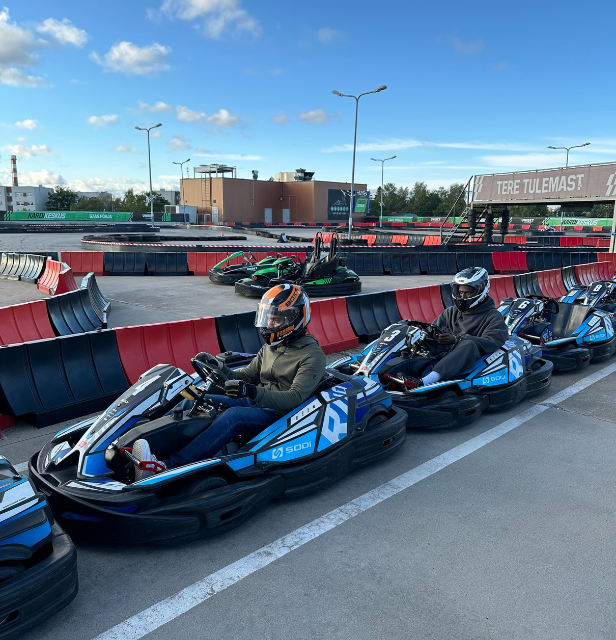
Most people approach their careers like an athletics track. They want to stand at the starting line, look down the lane, and see every single hurdle spaced neatly apart. They want to know exactly when to jump.
But building something real - whether it’s a business, a category, or a life - looks nothing like a track. It looks like climbing a cliffside where you can only see a meter of rock and the sky above you. Every time you reach for a handhold, you might find a hole you didn't anticipate.
But that uncertainty is not a flaw in the system. It is the job description.
The track was always an illusion - you’re already on the cliff.
Rooting for the real you,
Hanna from Pulse