.svg)


We are living in an epidemic of "Therapy Friends".
You know the dynamic. You meet up with a friend you haven't seen in three weeks. You sit in a nice café with oat lattes. You spend the first 30 minutes unloading your recent trauma, work stress, or relationship drama. They nod, validate your feelings, and say, "Oh my god, I’m so sorry, that sounds so hard."
Then, you switch roles. They unload, you validate. You hug, say "we should do this more often," and leave.
You feel better - lighter, even. But here's the uncomfortable truth: You didn't just hang out with a friend. You participated in a reciprocal, unlicensed therapy session.
It may feel good, but it's not the same thing as intimacy.
We have confused talking about life with sharing life. We have traded the "Village" - where our friends witnessed our messy, non-verbal reality - for a schedule of appointments where we perform a curated verbal summary of our existence.
The result? We have never been more "heard," yet we have never felt less known.
This paradox is exactly why it can feel so hard to genuinely meet people in Tallinn - or any modern city - despite having a full calendar.
The problem with the "Coffee Catch-up" is that it provides only one context.
When you sit opposite someone, static and controlled, you are seeing them in a vacuum. Your brain, desperate for closure, "fills in the blanks" (a process psychologists call predictive processing). You assume you know who they are based on how they tell a story. But you don't. You only know how they perceive themselves.
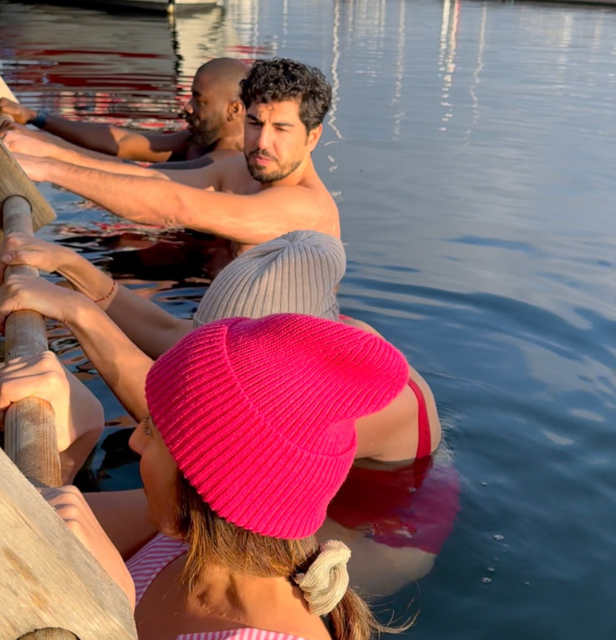
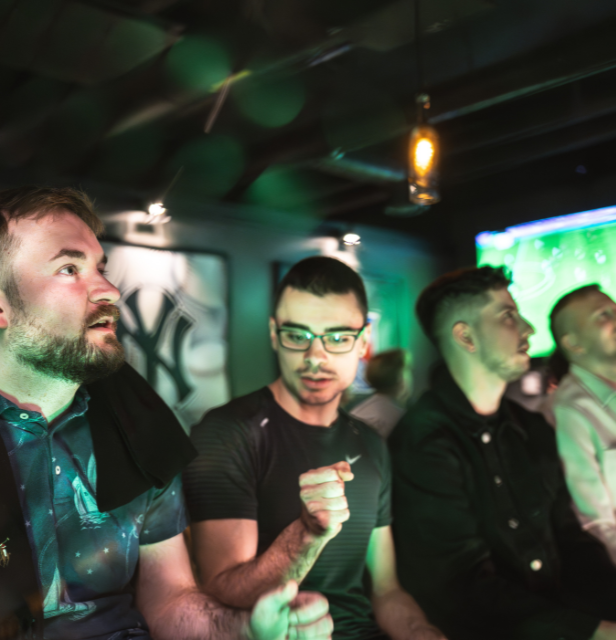
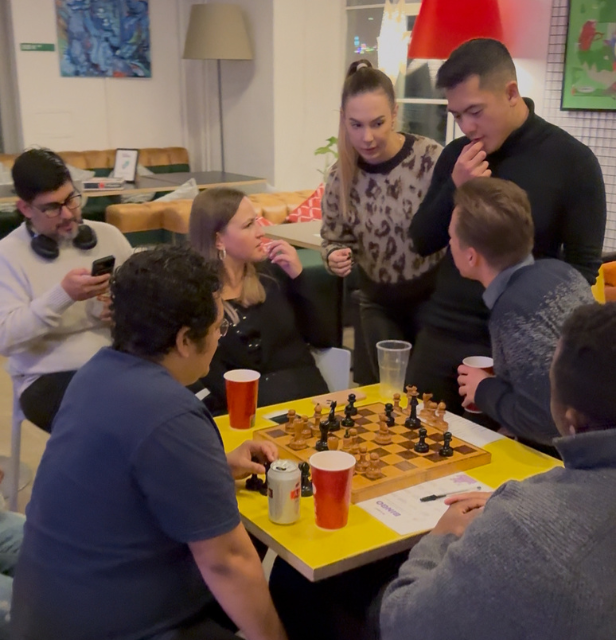
My theory is that to actually know someone, you need triangulation. I’ve developed a mental model for this that I call the "Three Data Points" Rule. You need at least three distinct data points in different contexts before you can say you have an idea of who this person is:
Until you have seen someone in 3D, your model of them is just a projection. You are friends with a hallucination.

"Coffee catch-ups" make it especially easy to show people a polished 2D version of yourself. This is because there is a limit to language.
We think if we describe an event well enough, the other person "gets it." But imagine a heavy wooden beam falls from a ceiling and narrowly misses your head. You go to coffee and tell your friend: "It was so scary, I almost died." They say: "Omg, that's awful."
They heard the words. But they didn't feel the dust in the air. They didn't see the specific panic in your eyes. They didn't feel the sudden, electric silence of the room.
When we're recounting our life to someone, we leave things out - because language forces us to. We shorten the stories, edit the little details. We choose the most flattering angle and the most palatable version of us.
Words compress reality. Experience expands it.
True community - the kind we actually crave - isn't built on recounting edited stories after the fact. It’s built on witnessing. It’s about being there when the beam falls. It’s about the silent look you exchange with a friend when a stranger does something weird on the subway.
That shared glance conveys more intimacy than three hours of conversation.

Evolutionary psychology tells us that social performance was originally a survival mechanism. In a small tribe, you had to fit in; deviance or conflict could lead to ostracism, which meant death. Your brain is literally hardwired to "perform" conformity to signal safety.
But in a world of infinite options - big cities, the internet, intercontinental transport - this ancient instinct has become a modern trap.
When you perform "politeness" on a first date or a coffee meetup, you are essentially marketing a persona. If people like that persona, they aren't liking you. They are liking the mask.
This creates a terrifying loop: You have to keep wearing the mask to keep the relationship. The moment you drop it - the moment you are messy, or disagreeable, or weird - the dynamic shatters. You end up trapped in a cage of your own making, surrounded by people who love a version of you that doesn't exist.
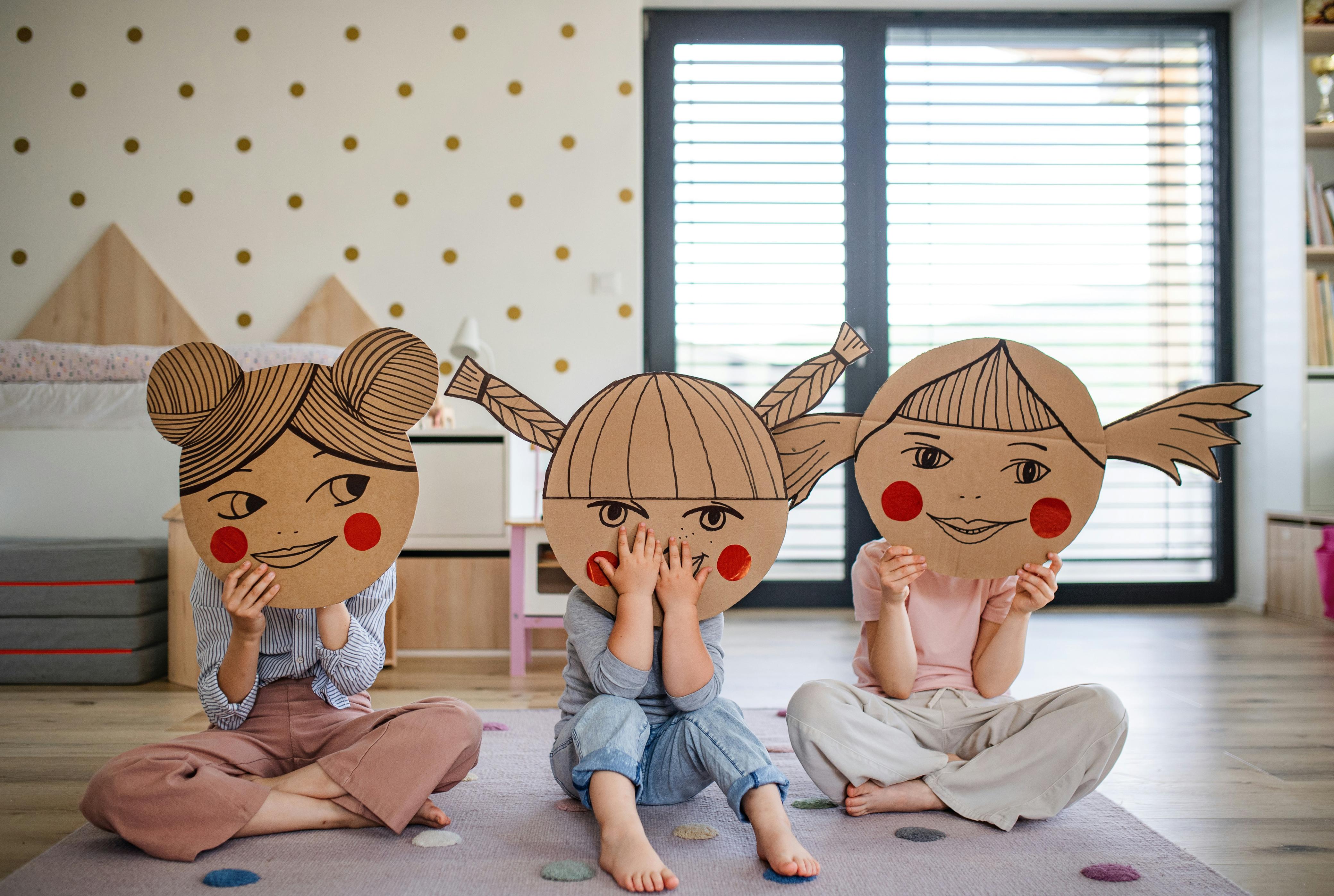
So, why do we trap ourselves in these "coffee catch-ups" and perform these polished versions of ourselves?
Because we are terrified that the real version of us is "wrong."
In Estonia, you’ll hear mothers tell their children “ole normaalne” (”be normal”). This deep-seated cultural pressure to conform is a huge reason why social activities in Tallinn often feel stiff or reserved. In the West, we tell ourselves to be "agreeable" or "polite". We act as if human personality is a vertical scale, where "Polite & Chill" is at the top (good) and "Opinionated & Intense" is at the bottom (bad).
But human beings are not vertical. We are horizontal. We're kind of like cooking ingredients.
Think of it like this: kale is not "better" than an oreo.
The ingredient itself isn't "bad." It's just in the wrong sauce.
When you perform an edited persona to fit into a group, you are essentially an Oreo pretending to be Kale because you think the world wants salad.
And it works - for a while. You get invited to the salad parties. You get the "salad friends."
But eventually, on that stressful trip or during that crisis, the green paint chips off. The truth comes out: You are chocolatey and crunchy. And suddenly, your friends are horrified. Not because you are toxic, but because they ordered a salad.
The end of the "Performance" begins when you accept your ingredient.
You have to be willing to be the Oreo.
This means accepting that the "Kale People" will not like you. That isn't a failure; that is data. It just means you aren't in a milkshake yet.
You cannot find your real village - the people who will witness you, handle you, and love you in high-definition - until you stop trying to be the ingredient you think they want and start trying to be the best version of the one you are.
Stop trying to be kale. Let the salad lovers walk away so the dessert lovers can find you.

The next time you want to see a friend, don't ask to "grab a coffee." You don't need more advice or validation. You need witnesses.
So ask them to help you build IKEA furniture. Ask them to come grocery shopping with you. Go to a dance class where you both look stupid.
Stop auditing for the role of "Good Listener" by having perfect conversations. You only find your "Partner in Crime" by sharing messy experiences.
Rooting for the real you,
Hanna from Pulse

---
The concept of "Shared Experience" is the foundation of Pulse Wrld. We host weekly social activities in Tallinn, Estonia, designed to help you skip the "coffee interview" and get straight to the real connection. Stop performing and come get your three data points - we saved you a spot.