.svg)


There is a strange inversion in how modern life operates.
If you look closely at the mechanics of the world today, you will notice that some of the things we assume should be an uphill battle are actually surprisingly smooth. Massive structural changes like shifting your career, uprooting your family, or moving across the globe often slide into place with a shocking persistence. Like a ball rolling down a hill, it actually requires work to stop the momentum once you give it the first push.
At the same time, the things we assume should be natural and effortless - like spending an hour hanging out with a close friend who lives in the same neighborhood - often feel like stubbornly swimming against the current.
We have engineered a reality where executing nearly any solo life pivot is completely frictionless, but maintaining the baseline of human connection requires a never-ending, exhausting stream of proactive decisions.
It feels as though we have slipped into a slightly altered, glitchy multiverse. How did the grand scale of life become so responsive, while the small scale became so inert?
We have explored before on this blog how big life changes aren't born out of some sudden, overwhelming readiness. They start with small and non-committal, but real, micro-actions - an email inquiry, a step outside the house, a visit to an open class or workshop.
But what is really fascinating is the acceleration that occurs the moment that initial hurdle is surpassed. If a monumental life change only involves your own autonomy, the process naturally speeds up.
When you make a big decision for yourself, you do not need consensus. You don’t need to coordinate timelines with a group chat. You simply make a choice, and the highly-optimized systems of our world - digital applications, global mobility, instant communication - rise up to accommodate you. You can completely change the trajectory of your life in an afternoon because the only variables you are managing are your own. The dominoes fall exactly where you push them.
But human connection does not work like falling dominoes. It works like fluid dynamics. The moment an action requires the alignment of speed, direction, and energy with another person, the momentum abruptly dies.

It didn't used to be this hard just to exist around other people.
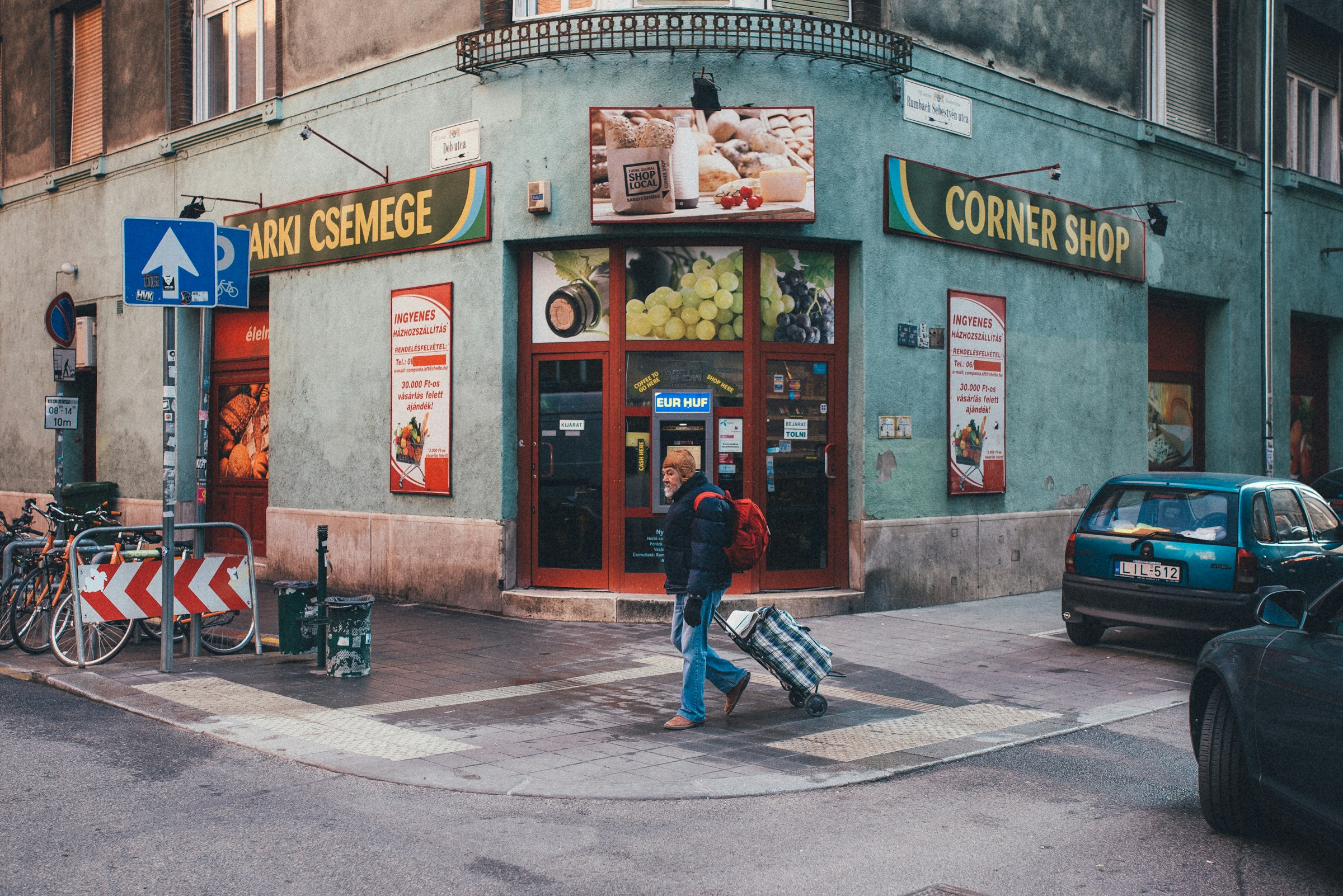
Not that long ago, if you wanted a late-night snack, you couldn't summon it to your door. You had to put your shoes on and walk ten or fifteen minutes down the street to a grocery store. That walk was slightly inconvenient, but it served an important hidden function: it created ambient overlap with other people’s lives.
You walked down the street and passed neighbors. You stood in the hallway and saw a classmate. You went to the store for a pack of cookies and ended up running into three people you knew.
This shared physical reality is what created unscripted adventures. If there was a transit strike, you might find yourself taking a completely new route across the city, sitting next to an acquaintance you barely knew, bonding because you were both caught in the same situation. You didn't plan it. You didn't agree on a calendar date or meeting spot. You just survived an inconvenient situation together and emerged with a unique shared memory.
We used to share a physical current. We were swept up in the same daily rhythms, which meant any accidental collisions between people had both longer duration and higher recurrence.
But today, we have meticulously optimized all of those collisions out of our lives. We order groceries from our couches. We work from our kitchen tables. We stream movies without leaving the living room. We have successfully insulated ourselves from nearly all of the minor inconveniences of the outside world.
But when you eliminate the walk to the grocery store, you also eliminate the people you would have bumped into along the way. And even more importantly, you eliminate the moment of recognition the next time it happens. By wiping out the inconveniences of life, we have completely wiped out the spontaneous collisions that used to keep our relationships alive.
Because there is no longer a default physical space where we naturally run into our friends, every single interaction now has to be willed into existence from scratch.
Seeing a friend is no longer a byproduct of living life; it is a dedicated project. To simply get a cup of coffee with someone you already love, you have to initiate a proposal. You have to send out a text inquiry and navigate the tetris of unsynced calendars.
But most draining of all, you have to continually put yourself out there. When you send a low-pressure invitation into the ether and receive a vague deferral - or worse, a polite but conversation-ending heart emoji - it triggers a very specific kind of vulnerability. You’re left hovering over your phone, wondering if you’re being annoying, debating whether to double-text, and feeling a bizarre sense of rejection from your own inner circle.
It’s no wonder that some people interpret this as a sign to no longer try. To just “find better friends” - as if the problem were a localized one.
We're lonely, yet the energy required to fix that loneliness feels like a second job. We’re running personal logistics departments just to maintain the friendships we already have. It’s a never-ending cycle of willpower and vulnerability in places where these didn’t used to be necessary.

This structural shift has entirely altered the psychology of public space.
Historically, being outside was the default human condition. You went to a park and lay on the grass, or you sat in a plaza, simply because that is where life happened. You didn't need a deeply justified reason to be out of your house.
Try doing that today. If you go to a park alone, without a dog, a running outfit, or a clear timeline, it feels strangely uncomfortable. If you sit at a restaurant alone, you don't just feel solitary; you feel like you’re standing on a stage in front of an audience that's wondering why you have no one to sit with.
We have developed a societal tic where going outside without a clear, transactional purpose feels almost defiant. Everyone around us is rushing, wearing headphones, staring at screens. They’re moving swiftly from their workplaces to their cars to their homes. Scrambling to get back to the safety of the couch.
When everyone else is running, the act of standing still makes you a spectacle. It feels like you need an excuse for it, for being in public alone without a destination to hurry toward. Without it, you feel on display because you're the only one not participating in the collective rush toward isolation.
There is a profound dissonance in living in a world that caters so beautifully to the individual, yet makes communal existence - a state that has been the norm for as long as humans have existed, and is still the norm in many places - feel so out of reach.
We can rewrite our life story in a weekend, but we cannot gather three friends in a room without a month of forewarning.
We have been conditioned to believe that because everything else in our lives can be optimized and streamlined, our relationships should work the same way. But human connection defies optimization. It requires the very friction we have spent the past few centuries trying to eliminate.
The next time you walk outside without a destination, and feel that uneasy sensation of being on display while everyone else is speed-walking to nowhere, let yourself stand still and notice the glitch. The system is designed to keep you isolated and rushing. To break out of it, we don't need to become better at pitching to our friends or managing logistics. Instead, get up from the couch, put away the delivery app, and take the long walk for the cookies you're craving.
Rooting for the real you,
Hanna from Pulse